We built artificial proprioception for neural networks. Models that can sense and correct their own behavioral problems in real-time.
Every major AI lab is trying to make models safer, but none of them can see what the model is actually doing inside.
| Company | Approach | Limitation |
|---|---|---|
| OpenAI | RLHF + Internal Safety Team | Costs millions. Degrades capabilities. Black box. |
| Anthropic | Constitutional AI | One black box judging another. No per-behavior decomposition. |
| Google DeepMind | Internal Research | No commercial product. Not architecture-independent. |
| Meta AI | Open-Source + Red Teaming | Releases models without runtime monitoring. No internal behavioral sensing. |
| Proprioceptive AI | Hidden-State Behavioral Probes | Real-time. Pre-output. Architecture-independent. 999× separation. |
Behold the Proprioceptive Nervous System.
Our cortex injects self-awareness into context so that the model sees its own state and can override its reflexes with enhancement and suppressions. Adaptive memory recalibrates sensitivity across conversations. Plus interoception: confidence, entropy, perplexity — the model's vital signs.
We gave AI systems the ability to sense their own behavior before it manifests. Like how your body knows where your hand is without looking.
Father. Husband.
The story of one developer who saw the missing piece everyone else overlooked, and did what OpenAI, Google, Grok, Meta, and AMI could not do.
We asked the leading frontier language models to review our research, patents, and technical results. Here's what each had to say.
Proprioception is your body's ability to sense its own position and movement without looking. When you close your eyes and touch your nose, that's proprioception. Language models lack this—they have no awareness of their own behavioral state.
We built small neural networks (probes) that read the hidden states of language models and detect behavioral patterns—hedging, repetition, sycophancy, shallow reasoning—before those behaviors manifest in the output. The model gains "self-awareness" of its behavioral tendencies.
RLHF (Reinforcement Learning from Human Feedback) modifies the model's weights. It's expensive, requires human labelers, and often degrades capabilities. Our approach leaves the model frozen—we just read hidden states and intervene at decode time.
Better yet: our probes can replace human labelers for RLHF. Instead of paying humans to rate outputs, use probe scores as the reward signal. We call this Probe-Guided Reward Modeling. It's patented.
Yes. The technology is architecture-agnostic. You need access to hidden states during inference (standard in most frameworks). Training a probe for a new behavior takes about 20 minutes on a consumer GPU.
We're preparing enterprise licensing. Contact us at logan@proprioceptiveai.com for early access and partnership opportunities.
55 provisional patents filed with priority dates in January-February 2026. They cover the core technology, architecture-independent implementations, specific applications (RSI stability, RLHF replacement, sentinel monitoring), and commercial implementations.
We filed the architecture-independent claims on February 4, 2026—the same day we proved Mamba works. The IP position is comprehensive and defensible.
Cognitive probes are tiny neural networks that attach to the hidden states of any language model. They read the model's internal representations and detect behavioral problems — like hedging, hallucination, shallow reasoning, or repetition — before they manifest in the output.
Separation measures how well probes distinguish between desired and undesired behavior. Prior published research achieves 2–5×. We achieve 125×–1,376×. That's the difference between a lab curiosity and a production-grade system.
Pre-revenue. Validated technology, 55 provisional patents with 141 claims, architecture-independent proof. First commercial deployments targeted Q3–Q4 2026 in clinical AI.
Our research is published and archived on Zenodo:
Consistency Is All You Need — 43 pages
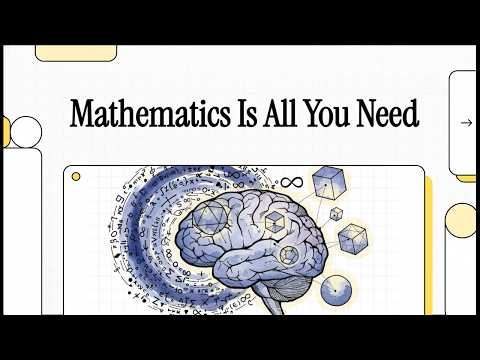
Mathematics Is All You Need — 459 pages
Deep Dive on our Architecture & Results
Request access to our technology for research, licensing, or enterprise integration.
Effective Date: January 1, 2026
Your information is NEVER shared and is Encrypted.
Proprioceptive AI ("we," "us," or "our") is committed to protecting your privacy. This Privacy Policy describes how we collect, use, and share information when you visit proprioceptiveai.com (the "Site").
We may collect limited information automatically when you visit the Site, including your IP address, browser type, operating system, referring URL, and pages viewed. We use industry-standard analytics tools to understand traffic patterns and improve the Site. We do not sell, rent, or trade your personal information to third parties.
If you voluntarily contact us via email or phone, we will collect the information you provide (such as your name and email address) solely to respond to your inquiry.
The Site may use cookies and similar technologies for basic functionality and analytics. You can control cookie behavior through your browser settings.
We use encryption (TLS/SSL) and reasonable administrative, technical, and physical safeguards to protect data transmitted through the Site. No method of transmission over the internet is 100% secure, but we strive to protect your information.
The Site may link to external websites (e.g., LinkedIn, Hugging Face). We are not responsible for the privacy practices of those sites and encourage you to review their policies.
The Site is not directed at children under 13. We do not knowingly collect personal information from children.
We may update this Privacy Policy from time to time. Changes will be posted on this page with a revised effective date.
If you have questions about this Privacy Policy, contact us at logan@proprioceptiveai.com.
Effective Date: January 1, 2026
By accessing or using proprioceptiveai.com (the "Site"), you agree to be bound by these Terms of Service ("Terms"). If you do not agree, please do not use the Site.
The Site is provided for informational purposes only. All content, including text, graphics, logos, and data, is the property of Proprioceptive AI or its licensors and is protected by intellectual property laws. You may not reproduce, distribute, modify, or create derivative works from any content on the Site without prior written consent.
Nothing on the Site constitutes an offer to sell or a solicitation of an offer to buy any securities.
The Site may contain forward-looking statements regarding technology capabilities, patent portfolio, research results, and business plans. These statements involve risks and uncertainties, and actual results may differ materially. Proprioceptive AI undertakes no obligation to update any forward-looking statements.
The Site and its content are provided on an "as is" and "as available" basis, without warranties of any kind, express or implied. Proprioceptive AI disclaims all warranties, including merchantability, fitness for a particular purpose, and non-infringement. We do not warrant that the Site will be uninterrupted, error-free, or free of viruses or other harmful components.
To the fullest extent permitted by law, Proprioceptive AI, its officers, directors, employees, and affiliates shall not be liable for any indirect, incidental, consequential, special, or punitive damages arising out of or related to your use of the Site.
We may revise these Terms from time to time. Continued use of the Site after any changes constitutes acceptance of the updated Terms.
For questions regarding these Terms, contact logan@proprioceptiveai.com.